
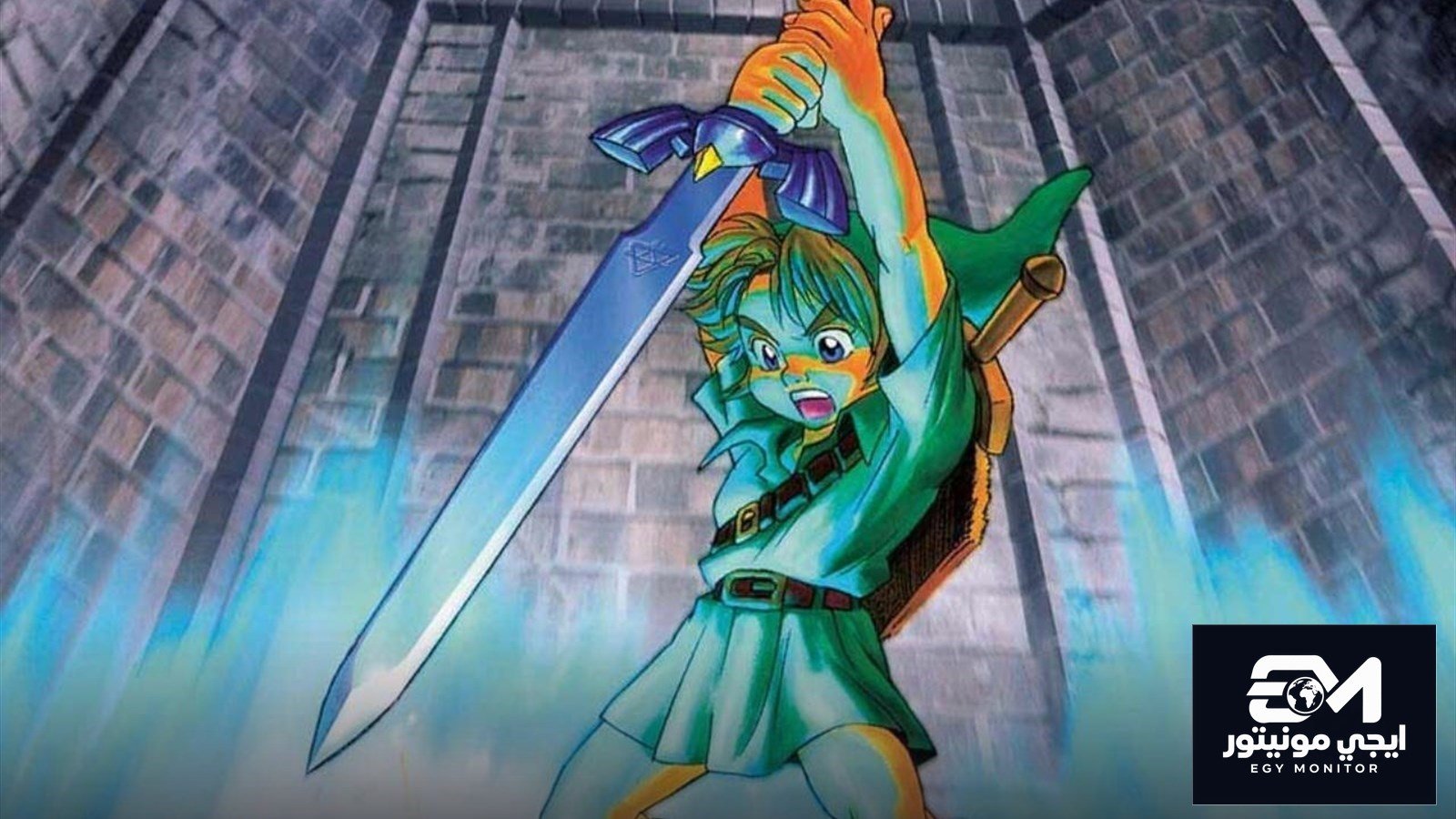
Ahead of its flagship November 5, 2026 launch on Nintendo Switch 2, technical enthusiasts searching for Zelda Ocarina of Time remake DLSS benchmarks uncovered a genuine hardware surprise inside the game's pre-load software licenses. Despite the Switch 2 running custom Nvidia Tegra silicon equipped with dedicated Tensor cores, Nintendo's ground-up remake skips Nvidia DLSS entirely in favor of AMD FidelityFX Super Resolution (FSR) 1.0 paired with SMAA anti-aliasing.
The revelation immediately sparked heated analysis across graphics forums and technical breakdowns. Why would Nintendo's centerpiece holiday showcase bypass AI-accelerated temporal upscaling when third-party Switch 2 ports rely heavily on DLSS to punch above mobile power limits?
Key Takeaways: Official Nintendo Switch 2 software notices confirm The Legend of Zelda: Ocarina of Time remake does not use Nvidia DLSS, relying instead on spatial AMD FSR 1.0 plus SMAA to lock a crisp 1080p at 60 FPS. Meanwhile, unofficial PC native ports like Ship of Harkinian remain the only route for injected DLSS upscaling.
Inside the Switch 2 Rendering Pipeline: FSR 1.0 + SMAA Explained
To understand Nintendo's engineering choice, it helps to separate spatial upscalers from machine-learning temporal upscalers. Nvidia DLSS reconstructs high-resolution frames across multiple historical frames using motion vectors, depth buffers, and AI Tensor core inference. While brilliant at turning 720p or 900p internal renders into near-4K output, DLSS carries a fixed frametime millisecond cost on mobile Tensor budgets—typically 1.5 to 2.5 ms per frame at high target resolutions.
When a game runs solidly at 60 frames per second, the entire frame budget is just 16.67 milliseconds. Because Nintendo's internal rendering engine—building upon learnings from Tears of the Kingdom and proprietary Switch 2 middleware—already hits high native pixel counts cleanly, pairing lightweight SMAA edge smoothing with spatial AMD FSR 1.0 sharpening preserves razor-thin GPU overhead and rock-solid frame pacing.
Key Technical Specs and Image Quality Trade-Offs
Hardware reviewers examining the 24.5 GB Switch 2 build highlighted four decisive technical takeaways:
- Locked 60 FPS Performance Target: Avoiding heavy temporal reconstruction frees GPU clock headroom, keeping Hyrule Field, Kokiri Forest, and particle-heavy Water Temple rooms locked at 60 FPS without dynamic frame-time spikes.
- Zero Ghosting on Fast Sword Swings: Early-generation temporal upscalers occasionally produce faint disocclusion trails behind Link's Tunic or Navi's glowing wings; spatial SMAA + FSR 1.0 eliminates temporal ghosting completely.
- 4K TV Scaling Limitations: Because FSR 1.0 lacks AI sub-pixel reconstruction, fine distant foliage and Hylian stonework look slightly softer on 65-inch 4K OLED screens than a hypothetical 1080p-to-4K DLSS Quality pass would have delivered.
- Cross-Gen Engine Roots: Projects that began early prototyping on transitional devkits before final Switch 2 Tensor SDK libraries matured often retain proven spatial upscalers rather than retrofitting motion-vector pipelines late in QA.
How Unofficial PC Ports Handle DLSS Today
Part of the online confusion stems from viral 4K showcase videos captured on desktop PCs rather than Switch 2 hardware. Community-driven PC preservation projects—most notably native decompilation ports like Ship of Harkinian or modded 3DS texture overhauls—frequently pair custom DirectX 12 / Vulkan wrappers and ReShade/upscaler mods with Nvidia DLSS and Frame Generation on RTX graphics cards.
Those unofficial PC builds rely on community modders injecting upscaling layers onto classic N64 geometry, whereas Nintendo's official November 5 Switch 2 release is a completely rebuilt commercial remake featuring modernized lighting, PBR materials, orchestral audio, and revamped camera controls.
Verdict: Does Missing DLSS Hurt the Switch 2 Experience?
In handheld mode on the Switch 2's native 1080p display, the remake looks extraordinarily crisp and responsive, making the absence of DLSS functionally invisible during portable play. Docked on large 4K living-room televisions, pixel-peepers will wish Nintendo had tapped Nvidia's Tensor cores for sharper distant horizons—yet flawless 60 FPS responsiveness ultimately serves Ocarina of Time's Z-targeting combat far better than wobbly higher resolutions.
Frequently Asked Questions
Does the official Switch 2 Ocarina of Time remake use Nvidia DLSS?
No, technical breakdowns and in-game open-source license disclosures confirm the official Nintendo Switch 2 remake does not use Nvidia DLSS. Instead, Nintendo paired spatial AMD FidelityFX Super Resolution (FSR) 1.0 with SMAA anti-aliasing for sharp edges.
What resolution and frame rate does Ocarina of Time remake hit on Switch 2?
The Nintendo Switch 2 remake targets a smooth 1080p output at a locked 60 frames per second within a 24.5 GB install size, prioritizing zero temporal ghosting and consistent combat responsiveness over 4K AI upscaling.
Why do some YouTube videos show Ocarina of Time running with DLSS?
Gameplay videos advertising Ocarina of Time with DLSS at 4K 120 FPS come from unofficial PC native decompilation ports like Ship of Harkinian using third-party graphics wrappers and high-res texture packs on desktop RTX GPUs.
Comments (0)
Leave a Comment