
The Deconstruction of Legacy Retail Banking
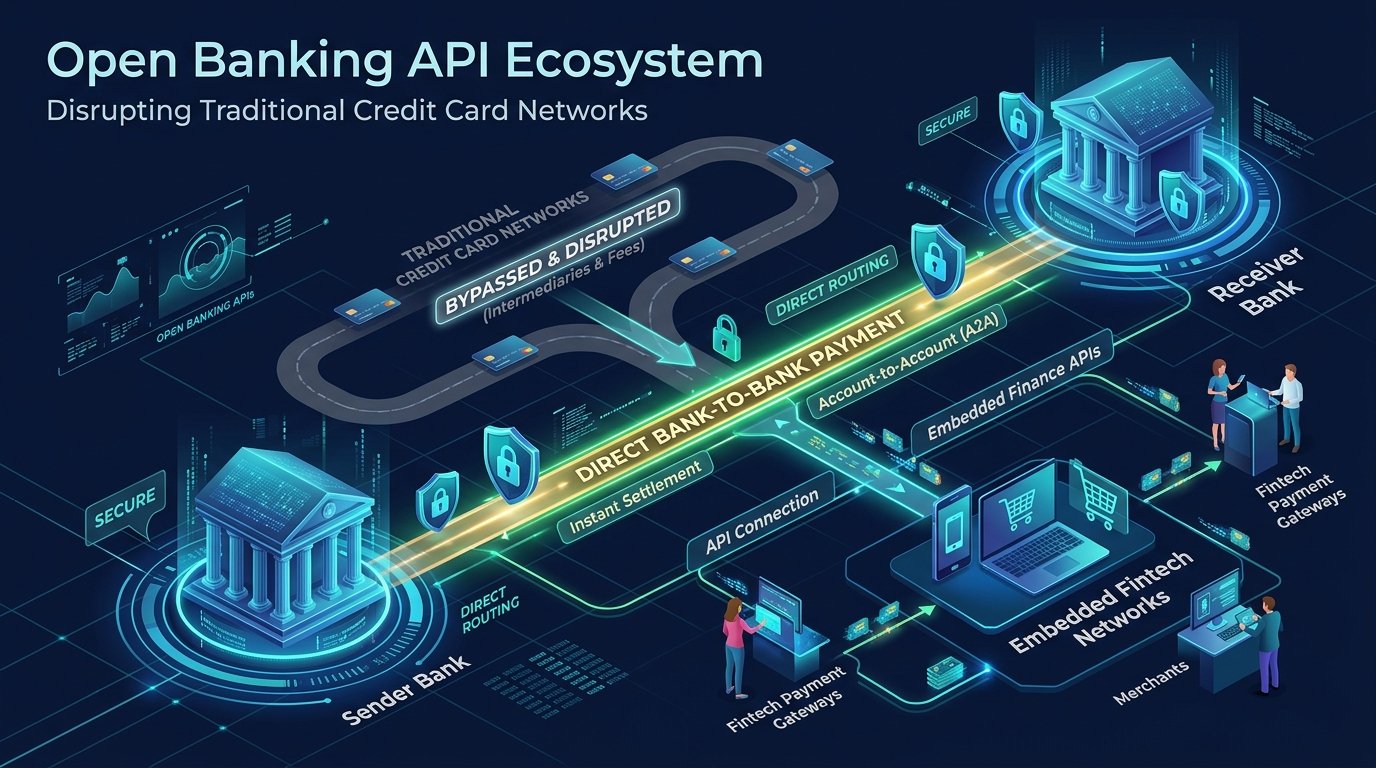
The global financial system is experiencing a structural migration powered by Open Banking APIs. By obligating traditional banks to securely share financial data and payment initiation rails with authorized third parties, fintech innovators are creating frictionless embedded commerce experiences.
Technological Pillars of Modern Open Finance
Open banking protocols yield profound benefits across the digital transaction lifecycle:
You May Also Like
- Account-to-Account (A2A) Direct Settlement: Bypasses costly credit card payment rails (Visa/Mastercard), reducing merchant transaction processing fees by over 80%.
- Instant Credit Underwriting: Analyzes programmatic real-time banking telemetry to calculate accurate risk profiles for instantaneous Buy Now Pay Later (BNPL) approvals.
- Embedded Treasury Services: Allows enterprise SaaS platforms to issue branded virtual bank accounts and automate payroll disbursements directly within enterprise workflows.
- Strong Customer Authentication (SCA): Enforces biometric FIDO2 and biometric bank-app approvals, drastically minimizing online payment fraud and card-not-present chargebacks.
Account-to-account payment volumes have surpassed traditional wire transfers in major European and Asian markets, fundamentally resetting merchant cost structures.
Navigating Privacy and Interoperability Mandates
Financial institutions must comply with emerging international standards like ISO 20022 and stringent consumer consent frameworks to prevent unauthorized telemetry monetization.





Comments (0)
Leave a Comment