
The Evolution of Modern React Architectures
The React ecosystem has decisively shifted toward full-stack server-driven frameworks. Choosing between Next.js (App Router) and Remix (now React Router v7) defines your application's data loading patterns, bundling performance, and deployment flexibility.
Core Architectural Differences Explored
While both frameworks deliver exceptional user experiences, their philosophical implementations differ significantly:
You May Also Like
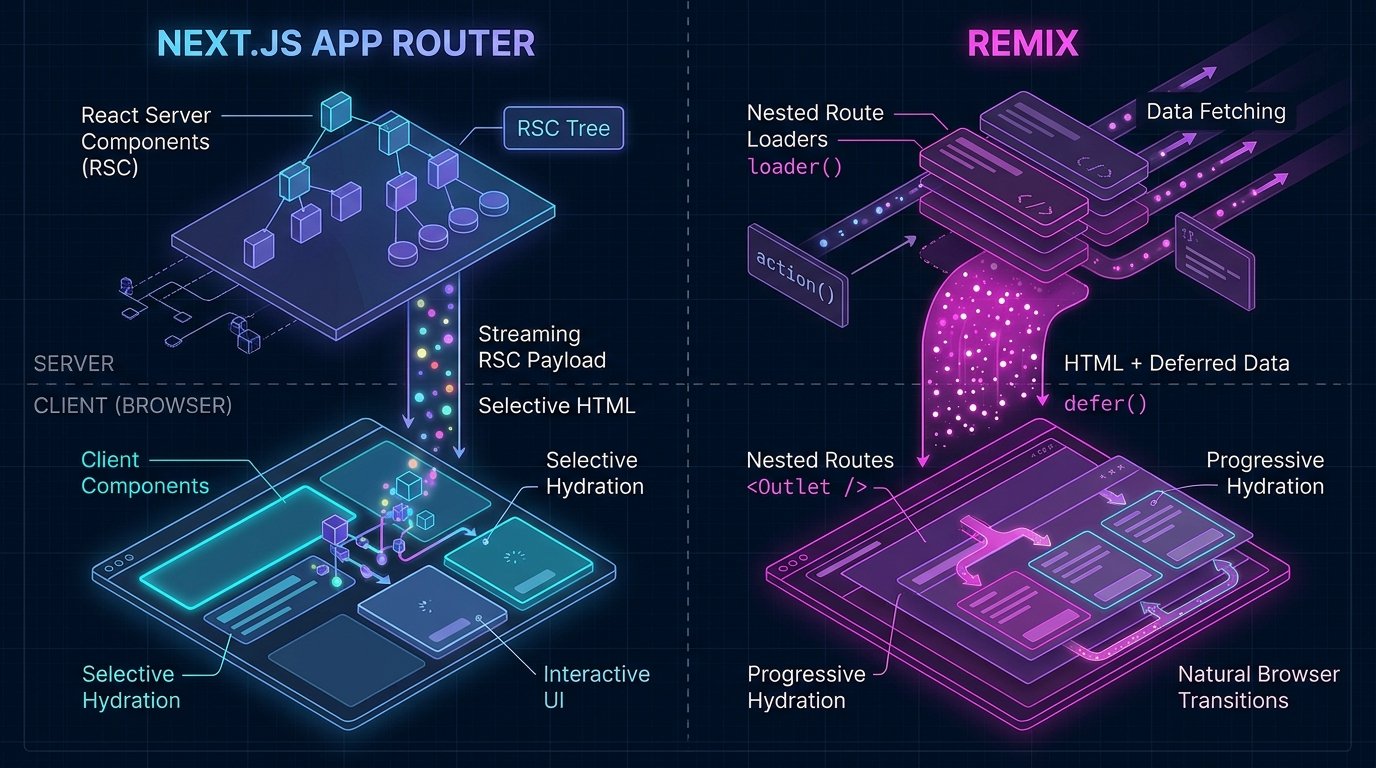
- React Server Components (RSC): Next.js embraces native RSCs, allowing developers to execute zero-bundle-size database queries directly within component definitions.
- Web Standards and Form Actions: Remix adheres strictly to native Web Fetch and HTML Form APIs, utilizing simple loader and action conventions for reliable mutations.
- Streaming and Suspense: Next.js leverages granular loading.js boundaries to stream critical UI blocks asynchronously as backend microservices respond.
- Deployment Portability: Remix compiles cleanly to any serverless, edge, or traditional Node.js container, whereas Next.js is heavily optimized around Vercel's edge infrastructure.
Teams building content-heavy applications with complex static generation benefit substantially from Next.js, while dynamic dashboards thrive on Remix's clean data revalidation model.
Developer Experience and Ecosystem Momentum
Both frameworks offer exceptional TypeScript support, nested layout architecture, and active communities, making the architectural decision dependent on your hosting preferences.






Comments (0)
Leave a Comment