
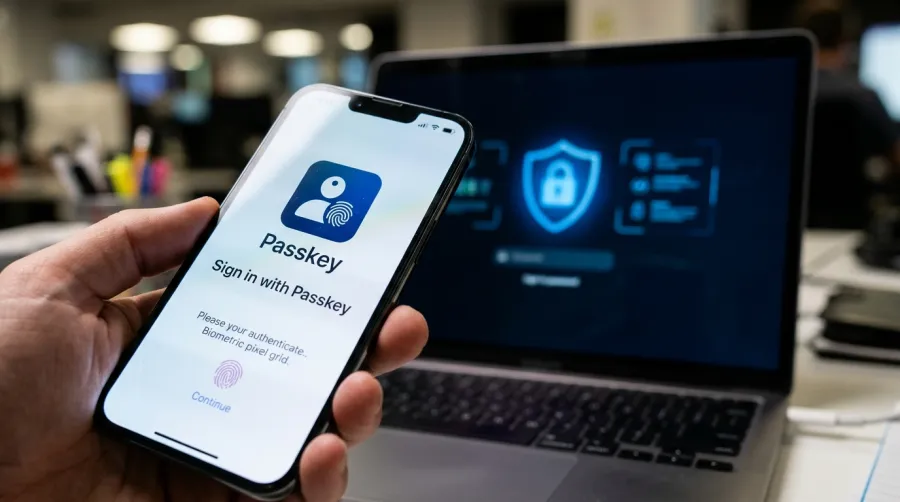
Passkeys have reached mainstream scale in late 2026, with an estimated 7 billion credentials in active use, a 93% login success rate, and up to a 30% conversion lift over traditional passwords. Engineering teams implementing WebAuthn now focus on conditional UI routing, Signals API cleanup, and WebAuthn PRF-backed recovery flows to close the remaining enrollment-to-usage gap.
2026 Adoption Data: Passwordless Credentials Cross the Tipping Point
For years, passwordless authentication lived in pilot programs. According to the FIDO Alliance State of Passkeys 2026 report, 90% of consumers are now aware of passkeys, 75% have enabled a credential on at least one account, and 49% use them regularly when available. By October 2026, FIDO estimates reached 7 billion active credentials worldwide, up from 5 billion in May 2026, while 68% of enterprises have deployed or are actively rolling them out for employee sign-ins.
Enterprise and consumer funnel metrics explain why product teams are prioritizing WebAuthn, complementing consumer banking trends covered in EgyMonitor's passwordless banking security analysis. The FIDO Passkey Index 2026 shows FIDO2 logins now carry 36% of successful sign-ins across major consumer relying parties—up from 26% in 2025—while saving users an average of 27 seconds per login and achieving a 93% success rate compared to 78% for passwords plus traditional MFA.
Why Usage Still Trails Enrollment: The Routing Problem
Despite 38% of accounts holding a registered credential in the FIDO Index, 8 of 10 reporting services still see usage lag behind enrollment because legacy login screens default to password fields or bury WebAuthn triggers behind secondary buttons. Meanwhile, 47% of consumers abandon a purchase when they forget a password, making poorly routed sign-in flows a direct revenue leak.
WebAuthn Implementation Patterns and 2026 Standards
Modern WebAuthn deployments go far beyond basic registration ceremonies. Five capabilities highlighted by Dashlane's 2026 passwordless roadmap—Conditional UI autofill, Automatic Passkey Upgrades, Related Origins Requests, the Signals API, and the WebAuthn PRF extension—turn fragile prototypes into reliable production flows.
Automatic Passkey Upgrades, for instance, allow relying parties to silently upgrade a user's legacy password into a synced FIDO2 credential immediately after a verified sign-in without interrupting checkout or onboarding. Combined with identifier-first routing, this pattern eliminates friction while steadily shrinking phishable password surfaces.
| Metric / Capability | Traditional Password + SMS MFA | Passkeys + WebAuthn (2026) |
|---|---|---|
| Login Success Rate | 63% – 78% | 93% (98% on Microsoft consumer accounts) |
| Average Sign-In Speed | Baseline (slow OTP entry) | ~3x faster (saves 27 seconds per login) |
| Checkout / Funnel Impact | 47% abandon on forgotten password | Up to 30% conversion lift |
| Phishing Resistance | Vulnerable to AiTM & MFA fatigue | Origin-bound cryptographic FIDO2 keys |
| SMS OTP Infrastructure Cost | High per-verification carrier fees | Near-zero marginal authentication cost |
"The work left for engineering teams in 2026 is routing, not persuasion: enrolled users already trust passkeys, but legacy login UIs keep pushing them back toward passwords."
You May Also Like
Designing Resilient Recovery Flows and WebAuthn PRF
Account recovery remains the hardest edge case when users lose all synced devices or switch ecosystems. Relying parties must separate authentication recovery from end-to-end encrypted data recovery, especially now that the WebAuthn Pseudo-Random Function (PRF) extension is supported across Android Google Password Manager, macOS 15/iOS 18.4+ iCloud Keychain, and Windows Hello (following February 2026 Windows 11 updates).
WebAuthn PRF deterministically derives a 32-byte symmetric key from a WebAuthn credential without exposing it to the server. However, because external QR-code cross-device flows can still omit PRF in certain browser combinations, teams should always pair PRF-encrypted vaults with secondary recovery keys or hardware FIDO2 backup tokens. For broader developer security practices, explore EgyMonitor's English developer hub.
Essential WebAuthn Engineering Patterns for 2026
- Conditional UI (Autofill Mediation): Trigger
mediation: "conditional"on username inputs so browsers surface synced passkeys automatically alongside saved logins. - Signals API Synchronization: Notify password managers whenever a user deletes a credential server-side or updates their display name, preventing stale login prompts.
- Related Origins Requests: Share passkeys cleanly across multiple regional domains (such as
.comand.co.uk) without forcing duplicate registrations. - Progressive Identifier-First Flows: Check FIDO2 credential availability immediately after email entry and launch WebAuthn before ever rendering a password box.
5-Step Rollout Checklist for Production Passkeys
- Enable Conditional Mediation First: Deploy passive autofill on existing login forms to capture returning passwordless users with zero UI disruption.
- Offer Post-Login One-Tap Upgrades: Prompt users to enroll immediately after a successful password + MFA sign-in, when intent and trust are highest.
- Implement Dual-Channel Recovery: Combine synced cloud credentials with at least one out-of-band recovery option (verified hardware key, recovery code, or identity proofing).
- Wire Up the Signals API: Keep client password managers synchronized with server-side credential revocations to eliminate dead-end prompts.
- Track Funnel Conversion Metrics: Measure login success rate, time-to-authenticate, and SMS OTP cost savings weekly across Safari, Chrome, and Edge.
Cross-Platform QA Reminder
Test credential creation in Safari on iOS alongside third-party password managers in Chrome on desktop to catch credential-provider handoff edge cases early.
Frequently Asked Questions
How much do passkeys improve login conversion rates?
Industry benchmarks from the FIDO Passkey Index report up to a 30% conversion lift on sign-in flows offering passkeys, driven by a 93% login success rate and 27-second faster sign-ins.
What happens if a user loses their phone with their only passkey?
Synced passkeys backed up to iCloud Keychain, Google Password Manager, or third-party vaults restore automatically on a new device; for single-device hardware keys or cross-ecosystem switches, applications should provide backup tokens or verified recovery codes.
Is WebAuthn PRF ready for encrypting user data in 2026?
Yes for primary platform authenticators—including Android, iOS 18.4+, macOS 15+, and Windows 11 (24H2/25H2)—though teams should retain a fallback key-wrapping mechanism for cross-device QR sign-ins.
Why should engineering teams adopt the WebAuthn Signals API?
The Signals API lets servers notify client password managers when credentials are revoked or usernames change, preventing users from attempting to sign in with deleted or outdated entries.






Comments (0)
Leave a Comment