
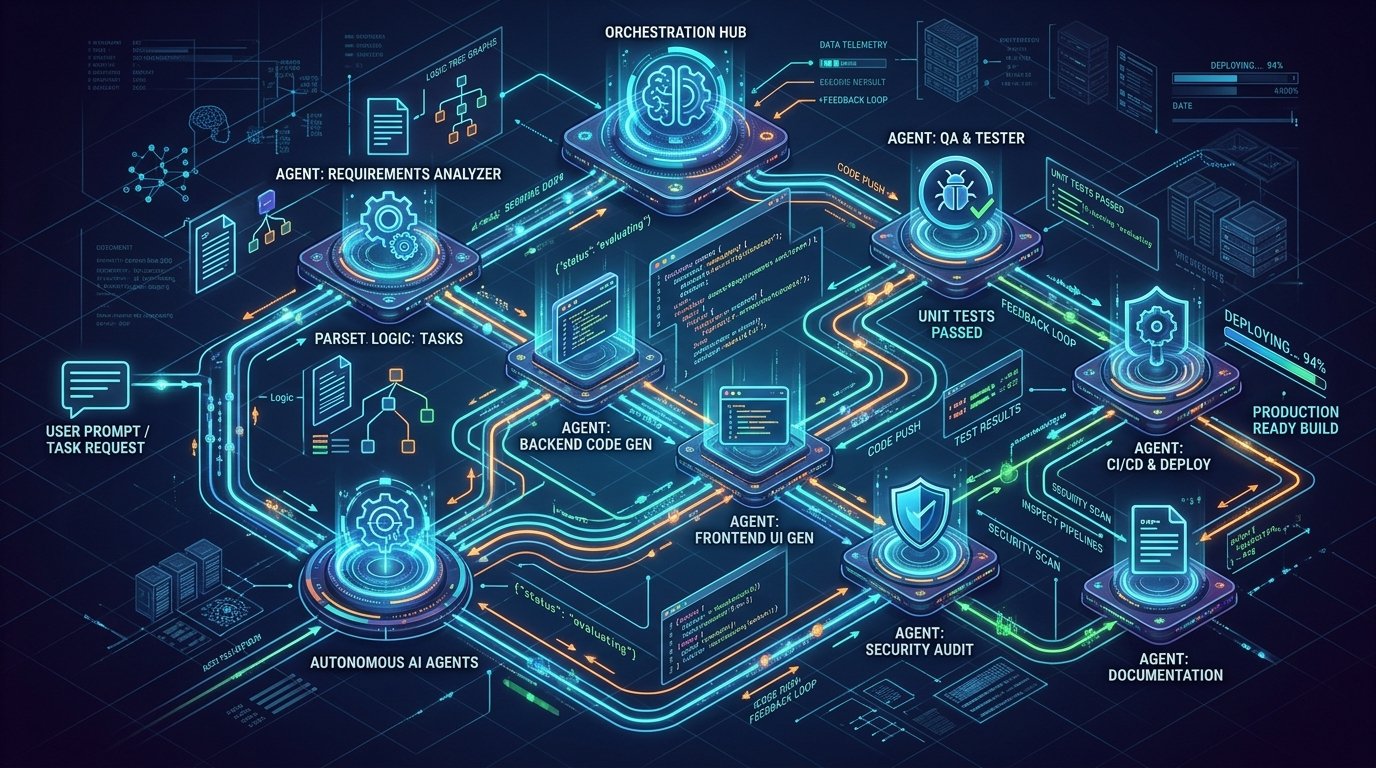
Beyond Single-Prompt Generative Interfaces
The frontier of enterprise artificial intelligence has transitioned from passive chatbots to autonomous multi-agent architectures capable of breaking down high-level business goals into sequential execution pipelines without continuous human intervention.
Key Architectural Patterns for Agentic Systems
Robust agent frameworks depend on four core engineering pillars:
You May Also Like
- State Graphs and Flow Control: Implementing cyclical state machines using libraries like LangGraph to handle retries, branching logic, and task escalation.
- Deterministic Tool Integration: Granting agents typed OpenAPI interfaces, vector database retrievers, and web execution sandboxes with strict execution guardrails.
- Hierarchical Role Delegation: Structuring specialized agents—such as a planner, researcher, coder, and critic—collaborating under a lead supervisor agent.
- Long-Term Ephemeral Memory: Utilizing persistent semantic caches to retain operational learnings across distributed task execution sessions.
By introducing a dedicated critique agent into the loop, automated code delivery pipelines experience an 80% reduction in syntax errors and hallucinated functions.
Production Guardrails and Human-in-the-Loop
Enterprise deployments must enforce transactional rate limits, programmatic permission scopes, and mandatory human sign-off steps for external database modifications.




Comments (0)
Leave a Comment