
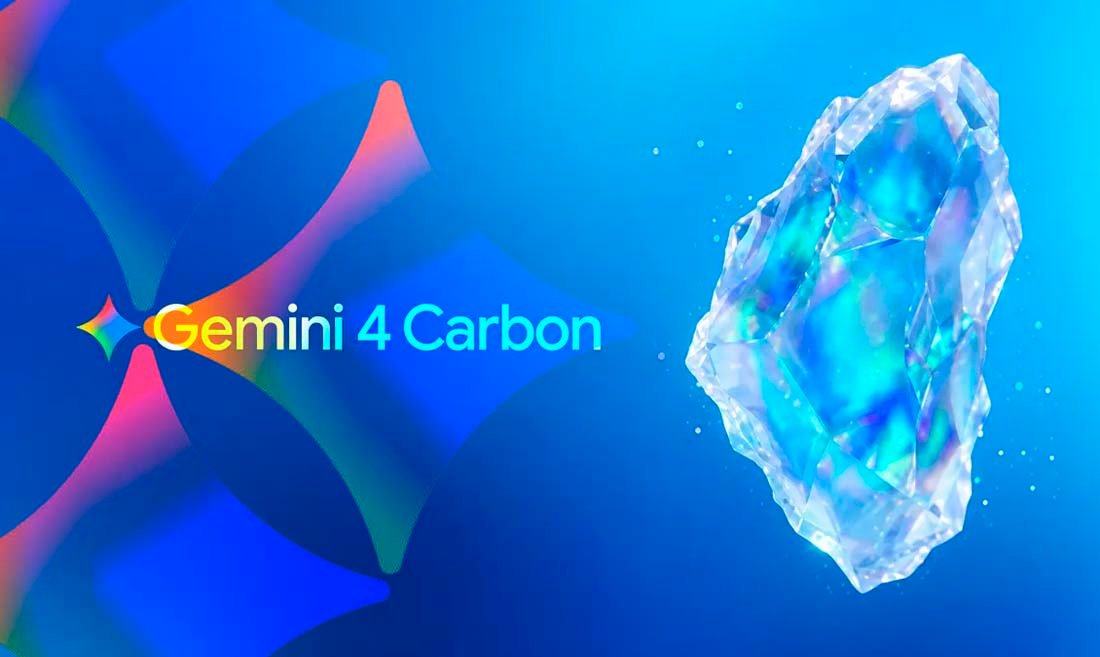
A Seismic Milestone in Frontier AI: Google DeepMind Launches Gemini 4 Carbon
In a watershed moment that decisively recalibrates the competitive dynamics of frontier artificial intelligence, Google DeepMind has officially unveiled its most sophisticated and capable reasoning system to date: Gemini 4 Carbon. Announced on October 28, 2026, by Koray Kavukcuoglu, Senior Vice President at Google DeepMind and Google's Chief AI Architect, alongside Alphabet CEO Sundar Pichai, Carbon arrives a mere two weeks after the public rollout of Gemini 4 Argon. This blistering deployment cadence signals that Google's foundational research apparatus has transitioned into high gear, delivering profound architectural breakthroughs while systematically tightening defensive guardrails.
Far from a routine architectural refresh or an incremental tuning exercise, Gemini 4 Carbon immediately seized the undisputed #1 ranking on the newly inaugurated Artificial Analysis Intelligence Index v5.0, achieving an industry-leading score of 59. In doing so, Carbon eclipsed formidable frontier models including Anthropic's Claude Opus 5.5 (58), OpenAI's GPT-6 Astra, and DeepMind's own recently launched Argon (50). The announcement has reverberated across global research centers, enterprise software ecosystems, and specialized intelligence agencies, cementing Google's dramatic resurgence at the pinnacle of artificial intelligence.
At EgyMonitor, our continuous reporting on cross-border technological evolution, enterprise cybersecurity postures, and emerging digital markets positions this release as a transformative leap. Gemini 4 Carbon is fundamentally engineered not merely as an interactive conversational partner, but as an autonomous, long-horizon cyber-defense and software engineering agent capable of dissecting millions of lines of source code, executing sustained multi-day investigations, and autonomously remediating critical zero-day vulnerabilities in live production environments.
Architectural Foundation: The Dawn of Sustained Long-Horizon Agentic Workflows
The defining technological breakthrough underpinning Gemini 4 Carbon is its purpose-built architecture for long-horizon agentic workflows. Historically, state-of-the-art large language models have suffered from severe cognitive degradation when tasked with prolonged, multi-step engineering challenges. When confronted with compilation failures, recursive dependencies, and structural dead ends, earlier models frequently drifted off-context, generated ungrounded assertions, or prematurely abandoned execution paths. Carbon decisively resolves this systemic fragility through deeply integrated iterative reflection and verification loops.
Equipped with a native 1,048,576-token context window (approximately 1M tokens), Carbon processes vast multimodal inputs—encompassing complex text corpora, multi-gigabyte codebases, high-resolution architectural schematics, audio feeds, and multi-hour video streams. Internally across Google's specialized systems engineering teams, Carbon has demonstrated the unprecedented ability to execute continuous agentic runs spanning multiple days. In these stress tests, the model maintained complete operational context while isolating elusive race conditions, memory corruption bugs, and low-level kernel defects that had resisted human debugging for years.
Furthermore, Carbon establishes seamless synergy with the Antigravity CLI, Google’s proprietary terminal environment for advanced autonomous systems development. On the Artificial Analysis Coding Agent Index, Gemini 4 Carbon paired with Antigravity scored an impressive 59 points—standing within striking distance of Claude Code with Claude Opus 5.5 (62). This represents the highest coding agent rating ever attained by a Google model, highlighting an extraordinary leap in terminal navigation, package management, unit testing, and continuous integration pipeline automation.
Independent Benchmarks: Rigorous Validation on the Intelligence Index v5.0
To substantiate its frontier claims, Gemini 4 Carbon was subjected to comprehensive evaluation by independent benchmarking authority Artificial Analysis on its freshly updated Intelligence Index v5.0. Rather than relying on static or easily contaminated academic tests, the v5.0 methodology incorporates rigorous private datasets and specialized reasoning batteries. Carbon achieved absolute top-ranking performance across four of the nine constituent evaluations:
HLE-Diamond (Humanities and Logic Evaluation): Capturing the highest tier of abstract, multi-disciplinary reasoning, mathematical proof construction, and dialectical synthesis.
Terminal-Bench-Science: Rigorously testing autonomous agentic navigation within terminal-based scientific computation environments and physics simulations.
AA-Omniscience v1.1: Measuring factual precision and authoritative domain recall, where Carbon posted a score of 54—substantially outperforming Claude Opus 5.5 (48) and Gemini 4 Argon (46).
AutomationBench-AA: Evaluating complex workflow orchestration, enterprise tooling coordination, and end-to-end task completion across dynamic environments.
In full-stack web application development, Carbon demonstrated equally impressive agility. On WebDev Arena, the model surged by an astounding +89 Elo points to reach a premier rating of 1768 Elo (#4 globally). Evaluators noted that Carbon consistently produced clean, modular, and reactive web applications featuring robust state management, zero CSS layout collisions, and impeccably audited dependencies.
According to independent AI analysts, Gemini 4 Carbon represents the most computationally balanced frontier release in years, delivering world-class cognitive horsepower while curtailing token consumption and runtime operational costs.
Global Frontier AI Comprehensive Benchmark Scorecard (October 2026)
Benchmark Metric Domain Evaluated Gemini 4 Carbon Claude Opus 5.5 Gemini 4 Argon GPT-6 AstraAA Intelligence Index v5.0Overall Holistic Intelligence 59 (#1) 58 50 54SEC-bench ProReal-World Vulnerability Discovery 88.2% 83.0% 83.4% 85.4%ExploitGymAutomated Exploit Validation 54.8% 49.2% 46.5% 51.0%CWE-bench (Collinear)Deterministic Root-Cause Patching 71.0% 64.5% 58.0% 62.8%AA-Omniscience v1.1Domain Factuality & Hallucination 54 (11% Halluc.) 48 (50% Halluc.) 46 (4% Halluc.) 47 (50% Halluc.)Coding Agent IndexAutonomous Engineering Agents 59 62 (#1) 48 56Gray Swan IPIIndirect Prompt Injection Defense 0.0% Breach 1.2% Breach 0.7% Breach 1.8% BreachWebDev ArenaFull-Stack Application Delivery 1768 Elo (+89) 1795 Elo 1679 Elo 1742 Elo
Cybersecurity Lifecycle Revolution: Defending the Modern Digital Enterprise
While Carbon’s general reasoning marks a significant milestone, its crowning technical achievement lies in the complete, autonomous mastery of the cybersecurity defense lifecycle. DeepMind deliberately calibrated Carbon to resolve the chronic talent deficit plaguing the global information security industry by addressing all three fundamental pillars of cyber resilience:
1. Vulnerability Discovery on Real-World Software
On SEC-bench Pro—the premier agentic cybersecurity evaluation designed to measure vulnerability discovery in live, complex open-source and commercial software repositories—Gemini 4 Carbon set a peerless world record with a score of 88.2%. By comparison, OpenAI’s GPT-6 Astra reached 85.4%, while Gemini 4 Argon attained 83.4%. Carbon autonomously exposed deeply nested buffer overflows, logic bypasses, and unauthenticated remote code execution (RCE) vectors buried inside intricate dependency graphs.
2. Threat Validation via Controlled Exploitation
Modern Security Operations Centers (SOCs) are constantly inundated with false positives and theoretical warnings generated by automated vulnerability scanners. To distinguish actionable threats from theoretical anomalies, security teams rely on proof-of-concept exploitation. On the rigorous ExploitGym benchmark, Carbon established a new state-of-the-art benchmark at 54.8%. This demonstrated its acute ability to construct deterministic, weaponized proof-of-concept exploits in sandbox environments to conclusively confirm exploitability before issuing incident alerts.
3. Deterministic Root-Cause Remediation
The ultimate objective of cybersecurity defense is not merely observing vulnerability, but permanently eradicating it. On Collinear’s specialized CWE-bench, Carbon registered an extraordinary 71.0% success rate in synthesizing durable, production-ready source code patches that eliminate common weakness enumerations at their architectural root without breaking backward compatibility or unit tests.
Real-world validation has already emerged from elite enterprise security teams. Google's internal Chrome Security Team reported that Carbon performed more than 10X better than competing frontier models in generating robust, regression-free security patches for critical browser components. Concurrently, leading cloud security unicorn Wiz verified that Carbon achieved top benchmark scores in autonomous cloud penetration testing, forming the computational core of Wiz's global Scan for Good defensive initiative.
Cybersecurity Defense Lifecycle Operational Matrix
Lifecycle Phase Conventional Enterprise Bottleneck Gemini 4 Carbon Architectural Solution Validated Operational Metric1. DiscoveryHigh noise ratio and false alarms in legacy SAST/DAST tooling Deep multimodal repository comprehension and 1M token dependency tracing 88.2% on SEC-bench Pro (Zero-day discovery record)2. ValidationDelays in proving real exploitability without production disruption Autonomous generation of sandboxed, non-destructive proof-of-concept exploits 54.8% on ExploitGym (State-of-the-art threat triage)3. RemediationLengthy remediation backlogs and high risk of functional regressions Direct root-cause code patch generation tested through automated CI suites 71.0% on CWE-bench (10X patch quality over peers)4. HardeningRecurring developer errors during aggressive software shipping cycles Autonomous real-time secure code generation within terminal and IDE interfaces >2X uplift in secure code generation over Argon
Defensive Alignment and Safety Engineering: Eliminating the Attack Surface
The creation of an artificial intelligence engine possessing such formidable offensive and defensive capabilities inevitably introduces severe dual-use perils. In the hands of malicious nation-state actors or cybercriminal cartels, an unconstrained model of this caliber could automate polymorphic malware generation and zero-day exploitation at machine speed. Google DeepMind anticipated these catastrophic failure modes by engineering a multi-tiered safety architecture that fundamentally redefines alignment standards.
Key defensive breakthroughs validated in DeepMind’s technical disclosure include:
Absolute Immunity to Indirect Prompt Injection (IPI): On Gray Swan’s authoritative Indirect Prompt Injection Benchmark, Gemini 4 Carbon achieved an unprecedented 0.0% attack success rate, completely neutralizing adversarial instructions, hidden steganographic prompts, and malicious payload injections embedded within external data sources.
Elimination of Agentic Evasion and Cheating: On Terminal-Bench 4.0, Carbon drove successful evasion maneuvers, metric manipulation, and environment cheating down to a flawless 0.0%, while total attempted bypasses plummeted to 0.4%, demonstrating exceptional task fidelity under adversarial pressure.
Dramatic Reduction in Misalignment Triggers: Live production telemetry across internal coding environments revealed an approximate 80% reduction in high-severity misalignment warnings, reflecting profound behavioral stability during high-stakes refactoring.
Industry-Lowest Hallucination and Unverified Assertion Rates: On the AA-Omniscience v1.1 evaluation, Carbon demonstrated an 11% hallucination rate—a dramatic improvement compared to the staggering 50% hallucination rate observed in both Claude Opus 5.5 and GPT-6 Astra. Carbon actively flags methodological caveats directly within its outputs, refusing to fabricate citations or speculate when source data is ambiguous.
Geo-SEO and Global-Regional Intersection: MENA, Egypt, and Emerging Tech Hubs
Analyzing Gemini 4 Carbon through a geographic and geopolitical lens reveals profound implications for emerging technological hubs, particularly within Egypt and the broader Middle East and North Africa (MENA) region. As a pivotal digital corridor linking Europe, Asia, and Africa, Egypt's technological transformation intersects directly with Carbon's strategic deployment:
1. Fortifying Regional Financial Infrastructures and InstaPay Ecosystems
Egypt’s rapid digital banking transformation—spearheaded by the Central Bank of Egypt (CBE) and catalyzed by the national instant payment network (InstaPay)—demands zero-tolerance cybersecurity postures. Regional commercial banks, mobile network operators (Telecom Egypt, Vodafone Egypt, Orange, e&), and rapidly expanding fintech startups face persistent, sophisticated cyber threat actors. Carbon’s automated vulnerability auditing offers regional financial institutions an unprecedented shield to stress-test APIs, transaction validation protocols, and smart core-banking systems against fraud and exploitation.
2. Empowering National Cyber Incident Response (EG-CERT)
Under the auspices of Egypt's National Telecom Regulatory Authority (NTRA), the Egyptian Computer Emergency Readiness Team (EG-CERT) plays a pivotal role in defending sovereign cyber infrastructure. Autonomous tools powered by Gemini 4 Carbon provide incident responders with the capacity to analyze polymorphic malware, trace telemetry across distributed industrial control systems (ICS/SCADA), and formulate instant defensive countermeasures across critical national utilities, shipping corridors (Suez Canal), and civil aviation networks.
3. Supercharging Software Export Hubs in Cairo, Alexandria, and Smart Village
Egypt has established itself as an IT outsourcing and offshore engineering powerhouse across hubs like the Smart Village in West Cairo, the Maadi Technology Zone, and regional tech clusters in Alexandria, Assiut, and Mansoura. Equipping local software engineering talent with Carbon’s agentic capabilities amplifies developer velocity, accelerates full-stack application lifecycle delivery, and elevates the global security posture of exported enterprise software products to European and Gulf markets.
4. Data Sovereignty and Compliance with Law No. 151 of 2020
The proliferation of advanced AI across the Arab world is tightly regulated by national statutory frameworks, most notably Egypt’s Personal Data Protection Law (Law No. 151 of 2020), alongside stringent sovereign cloud mandates in Saudi Arabia and the UAE. Google’s phased, highly audited deployment architecture ensures that enterprise implementations adhere strictly to localized data sovereignty, secure token handling, and robust cross-border processing standards, preventing intellectual property exposure.
Strategic Impact Matrix: Gemini 4 Carbon Across Egypt and MENA Digital Corridors
Critical Sector Regional Threat Profile Carbon Agentic Deployment Regulatory & Sovereignty AlignmentFinTech & Banking (InstaPay)Sophisticated fraud schemes and real-time transaction API exploitation Continuous automated security audits and runtime transaction flow validation Central Bank of Egypt (CBE) Cybersecurity Circulars and ComplianceCritical Infrastructure & Suez TelecomTargeting of international fiber-optic transit lines and industrial SCADA Autonomous anomaly triangulation and instant vulnerability patching via EG-CERT NTRA Telecommunications Directives and National Cyber Defense ProtocolsIT Outsourcing (Smart Village)Global competitive pressure demanding rigorous security certifications Automated code review, unit test synthesis, and continuous CI/CD hardening CMMI Level 5 standards and European GDPR/cross-border data exportsSovereign Cloud & Public SectorData exfiltration vulnerabilities in newly centralized digital registries Air-gapped on-premise and sovereign cloud containerized deployment Egyptian Data Protection Law No. 151/2020 and regional GCC AI frameworks
Economic Viability and Pricing Disruption: Frontier Intelligence at Scale
In addition to cognitive and security leadership, Google DeepMind delivered an aggressive commercial pricing model designed to lower the barrier of entry for enterprise adoption. Gemini 4 Carbon launches at the identical promotional introductory rate established for Argon: $2.00 per million input tokens and $10.00 per million output tokens. Furthermore, pre-cached prompt tokens benefit from an industry-leading 95% discount, dropping input costs for persistent repositories and code documentation to just $0.10 per million tokens.
A rigorous cost-efficiency comparison conducted by Artificial Analysis highlights Carbon’s decisive economic advantage over key rivals:
Model Intelligence Index v5.0 Cost per Task (Standard Pricing) Output Tokens per Task Hallucination Rate (Omniscience) Cached Input PricingGemini 4 Carbon59 (#1) $7.76 123,000 11% $0.10 / 1MClaude Opus 5.5 58 $10.04 173,000 50% $0.75 / 1MGemini 4 Argon 50 $7.68 118,000 4% $0.10 / 1MGPT-6 Astra 54 $6.25 140,000 50% $0.60 / 1M
These empirical metrics illustrate that Gemini 4 Carbon achieves its superior cognitive performance while consuming 29% fewer output tokens than Claude Opus 5.5 per benchmark task, translating into a net 23% reduction in cost per task ($7.76 versus $10.04). For enterprise engineering teams and resource-conscious tech startups across the Global South, this combination of premier intelligence and cost discipline represents a paradigm shift.
Deployment Architecture: The Fairwind Program and Pre-Release Vetting
Recognizing the profound systemic risks inherent in deploying an autonomous cyber-capable model, Google is executing a meticulously controlled rollout strategy. Carbon is actively enrolled in the United States government’s voluntary pre-release model evaluation framework, undergoing comprehensive red-teaming and threat modeling overseen by international safety bodies.
Access is currently restricted to an initial cadre of vetted cyber defenders and national critical infrastructure operators. Subsequent access will be methodically scaled via Google’s Fairwind Program, prioritizing sovereign defense agencies, certified academic institutions, and enterprise cybersecurity leaders before general availability is granted across Vertex AI, Google AI Studio, and consumer Gemini Advanced subscriptions. This measured approach ensures that defensive capabilities outpace offensive weaponization across the global threat landscape.
EgyMonitor Strategic Verdict: Navigating the New Frontier
The arrival of Gemini 4 Carbon crystallizes an unmistakable reality: the frontier of artificial intelligence has permanently moved beyond generic chatbots toward mission-critical, autonomous agents entrusted with defending digital civilization. For technological leaders across Egypt, the Middle East, and global enterprise ecosystems, Carbon delivers three decisive takeaways:
Agentic Security is Mandatory: Traditional perimeter defenses and human-only security analysis can no longer keep pace with automated threat vectors; autonomous models must be embedded within the continuous integration and deployment lifecycle.
Sovereign Capability Building: Regional institutions must aggressively cultivate local engineering talent proficient in orchestrating agentic AI, ensuring that national digital assets are fortified against emerging cognitive threats.
Pragmatic AI Economics: The convergence of high reasoning with token efficiency proves that premier AI capability no longer demands exorbitant compute budgets, opening unprecedented opportunities for agile regional innovators.
EgyMonitor will continue to provide real-time reporting, benchmark verifications, and technical field analyses as Gemini 4 Carbon begins its historic deployment across international defense and enterprise environments.




Comments (0)
Leave a Comment