

In 2026, digital banking surpassed 53% global population adoption, reaching over 4.2 billion active users worldwide according to Juniper Research. Driven by 86% adult mobile phone ownership and 2.3 billion annual banking app downloads, mobile-first applications now dominate everyday account management, loan origination, and corporate treasury workflows globally.
The 2026 Inflection Point: From Convenience Channel to Financial Default
Crossing the 4.2 billion user threshold marks a 68% expansion from the 2.5 billion people who relied on online financial services in 2021. Rather than acting as a secondary convenience layered onto brick-and-mortar networks, mobile-first apps have become the operating backbone of retail and commercial finance. Data compiled in Neontri's August 2026 industry analysis shows that 76% of surveyed consumers now prefer electronic channels over traditional branch visits, while 54% reach for a smartphone app first whenever they check balances, move funds, or manage cards.
Even the most branch-loyal demographics have crossed the threshold. For the first time on record, Baby Boomers identify mobile apps as their primary method for managing bank accounts, surpassing both desktop web portals and in-person teller visits. Institutional filings confirm the velocity of this behavioral shift: SQ Magazine's 2026 mobile finance benchmark reports that Bank of America served approximately 59 million verified digital users in the first quarter of 2026, with more than 25 million customers executing 460 million Zelle transfers totaling $147 billion in a single quarter.
"Mobile finance has crossed from convenience into default, with session volume inside banking apps now growing faster than new app downloads across every major retail market." — 2026 Global Mobile Banking Assessment
Regional Engines Driving the 4.2 Billion User Milestone
Global uptake is far from uniform. While mature Western markets are consolidating around high-engagement super apps and open-banking integrations, emerging economies are leapfrogging legacy branch infrastructure altogether. China remains the single largest national market, accounting for roughly 25% of all digital banking users worldwide and generating an estimated $562.7 billion in electronic net interest income in 2026. Meanwhile, the World Bank Global Findex shows 79% of adults globally now hold an account at a bank, financial institution, or mobile money provider, supported by 2.1 billion registered mobile money accounts—1.1 billion of which are concentrated in Africa.
Market Indicator (2026)Verified FigurePrimary Growth DriverGlobal Online & Mobile Users4.2 billion (53% of population)Smartphone penetration (86% of adults)Annual Banking App Downloads2.3 billion (+7% YoY)Mobile-first onboarding and instant KYCRetail Checking Active Digital Rate87% of accountsInstant P2P transfers and virtual cardsBusiness Account Mobile App Use75% of accountsMulti-user approvals and mobile invoicingProjected Net Interest Income (2026)$1.66 trillion (+6.2% YoY)Automated lending and deposit retention
Commercial and SME Workflows Move to Smartphones
The most consequential shift of 2026 is occurring outside consumer checking. Historically, corporate treasurers avoided smartphones because business accounts required dual-control authorizations, batch payroll uploads, and complex audit documentation. According to 2026 institutional performance data, 78% of business accounts now maintain active online access and 75% actively use mobile apps. Moreover, 51% of all retail and small-business loan applications are now submitted through electronic channels rather than branch desks.
You May Also Like
Platform Architecture Behind Mobile-First Retention
Delivering sub-second responsiveness at billion-user scale requires banks to decouple front-end experiences from legacy batch cores. The global digital banking platform market reached $44.0 billion in 2026, expanding at a projected 19.8% compound annual growth rate toward $155.4 billion by 2033 as institutions invest in cloud-native microservices and real-time event streaming.
Key Technical Pillars of High-Retention Banking Apps
Engineering teams at leading retail banks prioritize four core architectural capabilities to keep session growth climbing faster than acquisition costs:
- Real-time payment rails: Native integration with instant settlement schemes such as Brazil's PIX, India's UPI, and US FedNow eliminates multi-day clearing delays.
- Embedded identity orchestration: Biometric step-up checks and automated eKYC compress account opening from days to under three minutes.
- Modular open-banking APIs: Standardized data sharing lets customers aggregate external accounts, investment portfolios, and utility bills inside one interface.
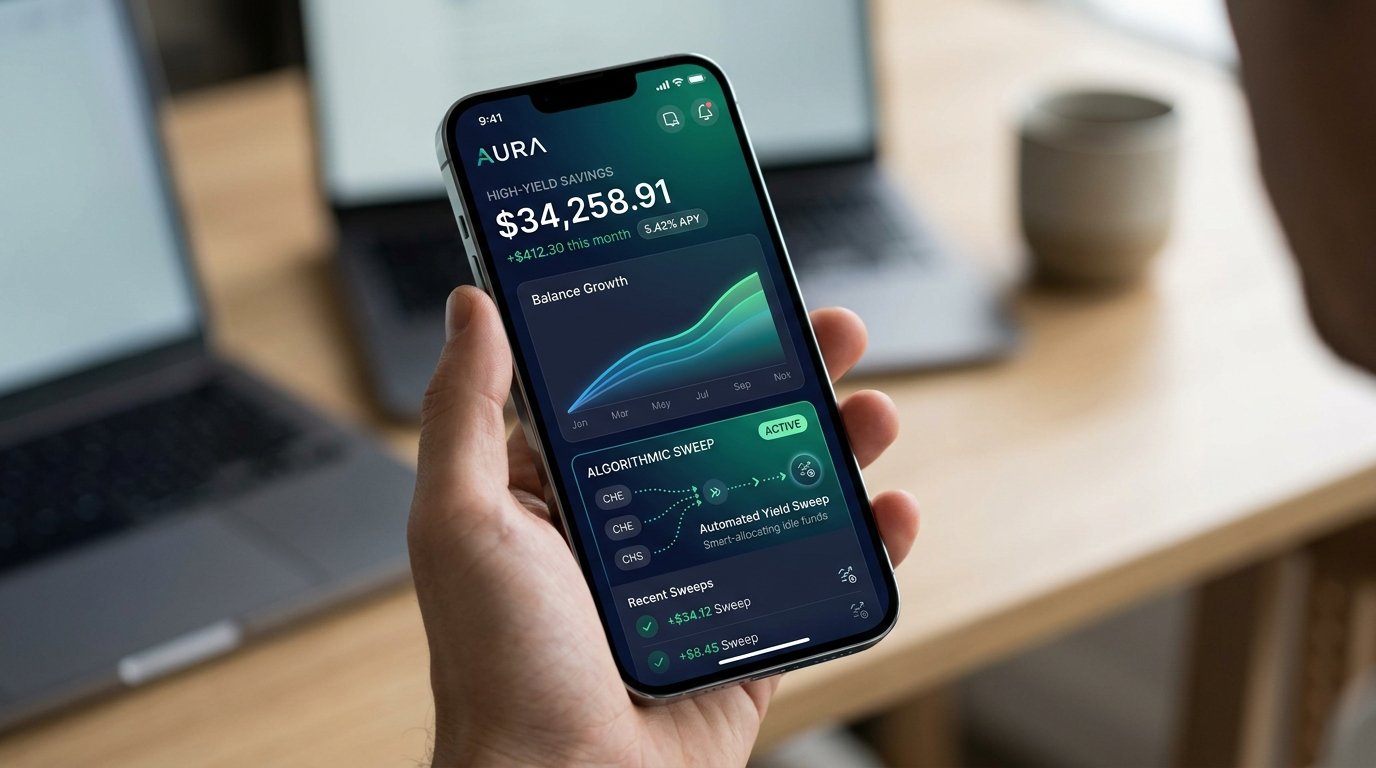
- Predictive cash-flow analytics: On-device and cloud models alert users to upcoming recurring charges, low-balance risks, and automated savings sweeps.
How Leading Institutions Convert Downloads Into Primary Relationships
Acquiring an app install no longer guarantees deposit primacy. Sensor Tower's 2026 benchmarks show global banking app sessions rose 10% year over year compared to 7% download growth, proving that retention depends on daily utility. Yet rising usage has not automatically eliminated skepticism: 81% of consumers cite fraud prevention as a decisive factor when selecting a primary financial provider, and digitally active users still scrutinize standalone apps for deposit safety.
- Audit onboarding friction: Eliminate redundant document uploads and branch-visit fallbacks that trigger drop-offs during identity verification.
- Unify retail and SME UX: Provide sole proprietors and small businesses with role-based mobile approval flows inside the same ecosystem they already trust.
- Embed transparent security cues: Pair instant transaction notifications with one-tap card freezes and visible biometric authentication prompts.
- Shift from balance display to financial coaching: Offer automated bill categorization, tax vaults, and instant credit pre-qualification within the primary feed.
- Measure session depth over raw installs: Track active monthly transfer volume, digital loan origination, and multi-product cross-sell rates.
As global digital banking net interest income tracks toward $2.20 trillion by 2030, the competitive divide is no longer between online challengers and legacy lenders. Instead, market share is flowing to institutions whose mobile-first ecosystems combine bank-grade trust with frictionless daily utility. In markets from the United Kingdom—where only 1.2 million adults remain digitally excluded, down from 6.9 million in 2017—to Sub-Saharan Africa, digital banking has permanently redefined how humanity stores, moves, and borrows money.
Frequently Asked Questions
How many people use digital banking worldwide in 2026?
Over 4.2 billion people—representing 53% of the global population—actively use digital banking services in 2026, up from 2.5 billion users in 2021.
Which region accounts for the largest share of mobile finance users?
Asia-Pacific leads global revenue share, with China alone accounting for roughly 25% of all online financial users worldwide and an estimated $562.7 billion in 2026 electronic net interest income.
Are business customers adopting mobile banking apps at the same rate as consumers?
Business adoption is rapidly converging with retail usage: in 2026, 75% of business accounts actively use mobile banking apps compared with 87% of retail checking accounts.






Comments (0)
Leave a Comment