

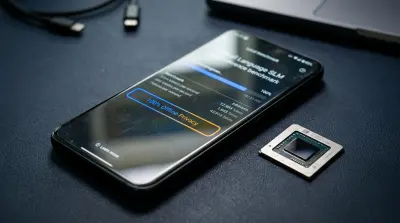
Small language models have moved from constrained research curiosities to primary production engines for on-device AI inference in 2026. Led by Google's Apache-licensed Gemma 4, Alibaba's Qwen 3.5, Mistral's Ministral 3, and Microsoft's Phi-4 series, compact models now execute multimodal reasoning, structured tool calling, and local RAG directly on laptops and smartphones with zero cloud token fees.
Why Edge Economics Flipped the Cloud-First AI Assumption
For the first three years of the generative AI boom, product architects defaulted to routing every prompt to massive data-center GPUs. In 2026, unit economics and privacy regulations broke that monopoly. When a consumer app serves millions of daily email summaries, document extractions, or voice transcriptions, paying metered cloud API bills erodes gross margins—whereas shifting those workloads onto silicon the customer already owns drops marginal inference cost to zero.
Simultaneously, modern small language models shed their reputation for brittle output. As Turing Post's 2026 SLM review highlights, compact checkpoints now handle native vision, audio, 128K–256K context windows, and reliable JSON function calling, allowing small language models to replace 70B+ cloud models on narrow, high-frequency workflows.
Hardware Reality: Memory Bandwidth Beats Peak TOPS
Chipmakers aggressively market Neural Processing Unit (NPU) trillions of operations per second—from Qualcomm's Snapdragon X2 Elite laptops and ~60 TOPS Snapdragon 8 Elite Gen 5 phones to Apple's Core AI framework unveiled at WWDC 2026. Yet autoregressive token generation for small language models is overwhelmingly memory-bandwidth bound, not compute bound.
The Thermal Throttling Ceiling on Smartphones
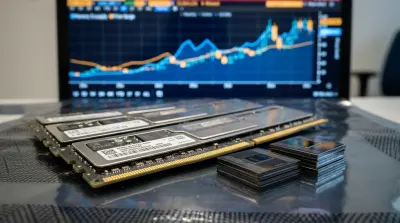
As AI Cloud Insider's 2026 edge hardware study demonstrates, a processor rated at 40 TOPS with 300 GB/s of memory bandwidth outperforms a 100 TOPS chip constrained to 100 GB/s during local LLM decoding. Furthermore, sustained peak NPU load triggers thermal throttling within two to three minutes on flagship phones, capping practical interactive mobile deployments of small language models at 3B–4B quantized parameters and premium laptops at 7B–14B.
Quantization-Aware Training Preserves Edge Accuracy
Rather than applying lossy post-training 4-bit compression, labs like Google now ship official Quantization-Aware Training (QAT) checkpoints and LiteRT-LM runtimes that retain reasoning precision while cutting RAM footprints by over 60%.
"A chip with 100 TOPS but 100 GB/s of memory bandwidth will underperform a chip with 40 TOPS and 300 GB/s on large-model inference. Raw TOPS numbers can mislead." — AI Cloud Insider Edge Report, 2026
The Four Dominant Small Language Models in 2026
Developers building offline-capable software now choose among four battle-tested open-weight families, all carrying permissive commercial licenses.
You May Also Like
- Google Gemma 4 (April–June 2026): Released under Apache 2.0 on April 2, 2026, Gemma 4 spans five sizes: E2B (~2.3B effective) and E4B (~4.5B effective) built specifically for edge devices, a 12B Unified multimodal tier (June 2026) that runs in 16 GB of laptop unified memory, a 26B-A4B MoE (4B active), and a 31B dense checkpoint. According to Codersera's October 2026 benchmark analysis, Gemma 4 E4B scores 69.4% on MMLU-Pro and 42.2% on Tau2—outperforming the prior generation's 27B Gemma 3—while hybrid sliding-window attention lifts 128K RULER recall from 13.5% to 66.4%.
- Alibaba Qwen 3.5 Compact Tier: Available under Apache 2.0 across 0.8B, 2B, 4B, and 9B dense tiers plus a 35B-A3B MoE, Qwen 3.5 brings native vision and 201-language support to consumer hardware. VDF.AI's October 2026 comparison notes that Qwen 3.5-9B fits inside ~6.6 GB of VRAM yet achieves 82.5% on MMLU-Pro and 91.5% on IFEval, rivaling models over ten times larger.
- Microsoft Phi-4 Series: Licensed under MIT, Microsoft's Phi-4 lineup pairs the 14B reasoning model with Phi-4-mini-instruct (3.8B parameters, 128K context, 200K multilingual vocabulary) and Phi-4-multimodal (5.6B using a Mixture of LoRAs to fuse text, vision, and speech without retraining the base weights).
- Mistral Ministral 3 and Small 4: Mistral's Ministral 3 ships in 3B, 8B, and 14B Apache 2.0 sizes with vision and 256K context—the 14B checkpoint fits cleanly in 24 GB VRAM at FP8—offering predictable function calling for European edge deployments.
2026 Small Language Models Compared for Edge Deployment
Selecting the right checkpoint depends on target device memory, modality support, and runtime toolchain compatibility.
Model FamilyEdge Parameter TiersModalitiesContext WindowLicense & Target DeviceGoogle Gemma 4E2B, E4B, 12B, 26B-A4BText, Image, Audio (E2B/E4B)128K–256KApache 2.0 (Phones & 16 GB Laptops)Alibaba Qwen 3.50.8B, 2B, 4B, 9B, 35B-A3BNative Text + Vision256KApache 2.0 (Phones & 8–24 GB GPUs)Microsoft Phi-43.8B Mini, 5.6B Multimodal, 14BText, Vision, Audio (5.6B)128K (Mini)MIT (Mobile, IoT & Copilot+ PCs)Mistral Ministral 33B, 8B, 14BNative Text + Vision256KApache 2.0 (Laptops & 24 GB Workstations)
Five Architecture Rules for Hybrid Edge-Cloud AI Apps
Engineering teams shipping reliable software powered by small language models in 2026 rarely go 100% offline; instead, they build privacy-preserving hybrid routers.
- Keep sensitive PII strictly local: Run transcription, medical note drafting, and document redaction on-device via Gemma 4 E4B or Phi-4-mini so raw user data never traverses public networks.
- Measure time-to-first-token on target silicon: Benchmark actual sustained tokens per second across MLX, llama.cpp, ONNX Runtime, and LiteRT-LM on mid-tier hardware—not just flagship developer workstations.
- Use grammar-constrained decoding for tool calls: Enforce strict JSON schemas at the sampler layer so compact small language models achieve near-100% API payload validity.
- Implement confidence-based cloud fallback: Handle 80% of routine classification, autocomplete, and local RAG queries on-device at zero marginal cost, escalating only complex multi-step synthesis to frontier cloud endpoints when battery or thermal budgets tighten.
- Deliver delta weight updates over Wi-Fi: Bundle 2–4 GB quantized weights as on-demand asset packs with cryptographic checksums rather than bloating base mobile app binaries.
Frequently Asked Questions
What parameter sizes are practical for small language models on consumer devices in 2026?
At 4-bit quantization (Q4), flagship smartphones reliably run 3B to 4B models like Gemma 4 E4B or Phi-4-mini without excessive thermal throttling, while 16 GB to 32 GB laptops comfortably run 7B to 14B models such as Qwen 3.5-9B or Gemma 4 12B.
Why is memory bandwidth more important than TOPS for on-device AI inference?
During text generation, the accelerator must read the entire model's weights from RAM for every single token produced. Consequently, RAM bandwidth dictates tokens-per-second throughput far more than raw matrix-multiplication TOPS.
Do small language models eliminate the need for cloud LLMs?
No. Small language models excel at low-latency, private, high-volume tasks like extraction, summarization, and local tool routing, while frontier cloud models remain necessary for open-ended deep reasoning and massive multi-document synthesis.




Comments (0)
Leave a Comment