
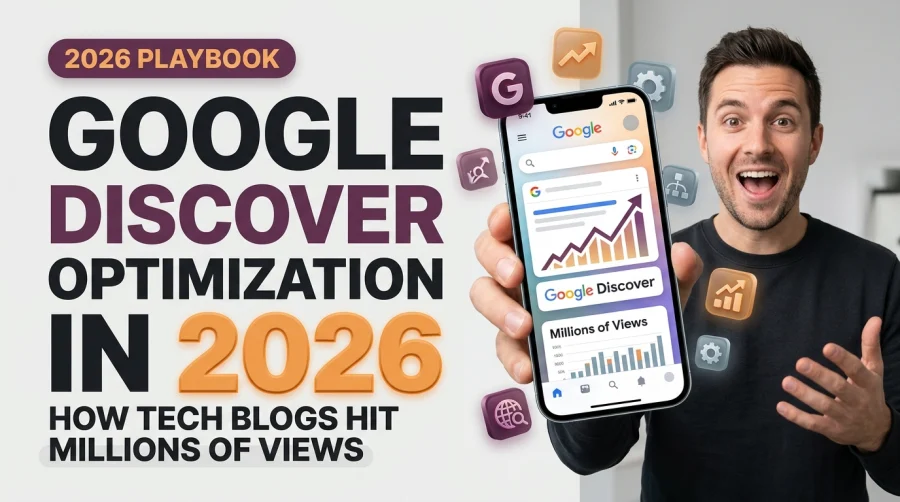
Google Discover optimization in 2026 centers on aligning high-resolution 1200px+ imagery, rapid first-hour click-through momentum, and deep Knowledge Graph entity authority. Unlike query-driven search, Google Discover pushes tech journalism directly into mobile feeds based on user interest graphs, allowing focused publishers to capture millions of intent-free views within hours of publication.
Tap Into Intent-Free Viral Distribution
Traditional organic search waits for a reader to recognize a problem, open a browser, and type a specific query. Google Discover flips that funnel completely. Powered by behavioral interest modeling, Chrome browsing history, and entity affinity, Discover surfaces articles proactively on Android home screens and the Google mobile app before a user searches for anything. For technology blogs, hardware reviewers, and digital newsrooms, a single story picked up by the Discover feed can dwarf an entire month of standard search impressions overnight.
Because Discover operates as a recommendation engine rather than a keyword directory, legacy SEO playbooks built around exact-match query stuffing fail to trigger feed distribution. Publishers who win consistently in 2026 treat Discover as an editorial and technical discipline combined. Every headline, thumbnail crop, structured data property, and initial distribution channel works together to signal relevance, freshness, and trustworthiness to Google's ranking classifiers.
Non-Negotiable Google Discover Signals
While Google does not publish a fixed weighting formula for Discover, empirical publisher telemetry across tech media reveals three core pillars that separate sporadic traffic spikes from repeatable mobile reach:
- High-Res 1200px+ Images: Use crisp, un-watermarked 16:9 hero images at least 1,200 pixels wide, paired with the
max-image-preview:largerobots meta tag so Discover renders full-width visual cards instead of tiny square thumbnails. - First-Hour Momentum: Publish breaking tech coverage quickly and distribute the link immediately to loyal newsletter subscribers, push-notification lists, and active social communities to spark early click-through rate (CTR) and dwell time.
- Topical Authority: Consistently cover a focused niche—such as artificial intelligence, cybersecurity, consumer smartphones, or cloud infrastructure—so Google confidently maps your domain and authors to those Knowledge Graph entities.
Strong emotional curiosity without misleading clickbait is the exact sweet spot Discover's algorithm rewards.
Visual Engineering and Image Aspect Ratios
In a mobile feed dominated by visual scanning, your featured image carries more weight than your meta description. Discover tests articles on small seed cohorts first; if the hero visual blends into the background or crops awkwardly on a 6-inch screen, the test cohort scrolls past and distribution stalls immediately. Avoid generic stock photography, cluttered text overlays, or publisher logos stamped in the corners, as Google explicitly discourages promotional watermarks in Discover cards.
Framing Subject Contrast for Mobile Feeds
High-performing tech blogs frame a single recognizable subject—such as a flagship smartphone camera module, a clean benchmark chart, or an unmistakable hardware prototype—against a high-contrast background. Keep the focal point centered within the inner 70% of the 16:9 canvas so automated edge cropping across different device aspect ratios never slices off the primary subject.
Technical Image Delivery Standards
Serve featured images in modern WebP or AVIF formats with explicit width and height attributes to prevent Cumulative Layout Shift (CLS). Ensure the hero image is preloaded with fetchpriority="high" and referenced cleanly inside your Article or NewsArticle JSON-LD schema under the image property.
Validating Large Preview Eligibility
Inspect your live HTML source to confirm that <meta name="robots" content="max-image-preview:large"> appears once in the document head without conflicting directives from caching plugins or CDN edge rules.
Comparing Google Search vs. Google Discover Mechanics
Editorial teams often sabotage Discover performance by writing headlines designed strictly for search intent. The table below outlines how optimization priorities diverge between standard Search and Discover feeds in 2026:
Optimization Factor Traditional Google Search Google Discover Feed
You May Also Like
Primary Trigger Explicit user keyword query Interest graph and entity affinity
Headline Style Direct, keyword-led, descriptive Curiosity-gap, clear tension, factual
Visual Requirement Helpful for UX and image packs Mandatory 1200px+ 16:9 hero card
Traffic Lifespan Months to years (evergreen decay) 24 to 72 hours (spike and resurface)
Key Engagement Metric Task completion and low pogo-sticking Initial CTR, scroll depth, and return visits
Step-by-Step Publishing Workflow for Discover Spikes
To turn Google Discover optimization into a repeatable traffic channel rather than a lottery, tech newsrooms should standardize a strict pre- and post-publish sequence:
- Map Primary Entities Before Drafting: Identify the exact brands, chipsets, software versions, or executives central to the story and include them naturally in the title, opening paragraph, and structured data.
- Craft a Two-Layer Headline: Pair a clear entity anchor with a concrete tension point or unexpected outcome—never withhold the core subject with vague phrasing like "This One Setting Changes Everything."
- Verify Core Web Vitals on Mobile: Test the article template on throttled mobile connections to keep Largest Contentful Paint (LCP) fast and eliminate intrusive interstitials that drive instant bounces.
- Trigger First-Hour Seed Traffic: Within 15 minutes of publishing, push the article to your email digest, Telegram or WhatsApp channel, and social profiles to generate authentic early engagement signals.
- Monitor Discover Performance in Search Console: Track click-through rates across headlines and hero images in the Discover report, iterating on visual framing when impressions rise without clicks.
Entity Authority, Author Bylines, and E-E-A-T
Discover heavily penalizes anonymous content farms that chase trending topics outside their core domain. Tech publishers should maintain dedicated author pages linked via sameAs schema to verified journalist profiles, GitHub repositories, or industry publications. When a writer consistently publishes hands-on benchmarks or security advisories within one vertical, Google associates both the author entity and the domain with reliable expertise, unlocking faster entry into Discover's seed testing pools.
Frequently Asked Questions
Why did my Google Discover traffic suddenly drop to zero?
Discover traffic is inherently cyclical and sensitive to both Core Updates and shifts in user interest. A sudden drop typically stems from declining headline CTR, a technical regression removing the max-image-preview:large tag, aggressive mobile ad layouts hurting user experience, or drifting away from your site's core topical entities.
Can evergreen tech articles appear in Google Discover?
Yes. While breaking news dominates short-term spikes, evergreen guides, hardware comparisons, and deep-dive explainers frequently surface in Discover whenever a related entity trends or when a user newly develops interest in that category. Refreshing evergreen pieces with updated 2026 benchmarks and crisp hero images often triggers renewed feed visibility.
How long does a typical Google Discover traffic spike last?
Most individual articles receive the majority of their Discover impressions within a 24- to 72-hour window after entering the feed. However, high-engagement stories with strong bookmark and share rates can resurface in secondary waves weeks later as new mobile cohorts match the topic's entity profile.






Comments (0)
Leave a Comment